
For the past four years, I’ve had the privilege of serving as Chief Technology Officer at Michigan Medicine, where I was brought in to modernize infrastructure and lead the organization’s move to public cloud. That work meant migrating thousands of systems and building the operating and security models to support them. It has been one of the most meaningful chapters of my career—and one that reinforced my position about where healthcare infrastructure must go next.
Working inside a leading academic health system fundamentally changes how you see technology. Infrastructure decisions are experienced in downtime windows, cybersecurity incidents, staffing shortages, recovery timelines, and moments where technology either enables care or hinders it. The stakes are human.
Long before my time at Michigan Medicine, my career was shaped by this conviction: health IT can’t reach its potential while constrained by legacy data center models. That belief informed my work building healthcare cloud platforms, including Virtustream Healthcare Cloud, and ultimately why I helped create EHC Consulting, a firm that specializes in Epic on public cloud strategy, migration, and managed services.
I believe that helping healthcare exit the legacy data center does far more than modernize infrastructure. It creates meaningful operational efficiencies, strengthens security posture and cyber resilience, improves business continuity and disaster recovery, and enables the tools, platforms, and scale of public cloud to support better patient care.
At Michigan Medicine, I saw firsthand what happens when infrastructure is engineered for resilience rather than maintained for familiarity. I saw how modern cloud-based approaches change recovery planning, security operations, scalability, and the ability to support emerging technologies responsibly.
Healthcare is entering a defining decade.
We are asking more of our technology platforms than ever before: greater resilience, stronger security, faster recovery, and readiness for what comes next. Cyber threats have intensified. Workforce constraints persist. Expectations around uptime are unforgiving. At the same time, AI, advanced analytics, and automation are placing demands on infrastructure that legacy environments were never designed to support. Waiting to modernize your infrastructure amplifies risk.
Public cloud today is about enhanced operational controls, engineered resilience, and the ability to design systems that anticipate failure rather than react to it. The risk is not that cloud fails. The risk is assuming your current environment won’t.
I’m honored to share that today marks my move as a full-time Founder and Managing Member of EHC Consulting to help health systems thoughtfully and responsibly navigate their transition to public cloud. While my impact inside one health system was meaningful, my ability to help many health systems move forward is greater.
In many ways, this is a full-circle moment. I began my career in management consulting, spent a decade at premier technology companies including NetApp, EMC, and Dell Technologies, and after four years inside a health system, I now bring those perspectives together with clarity and conviction.
We formed EHC Consulting because our healthcare clients wanted to exit the data center business, but there lacked a clear roadmap or vision on how to achieve that goal. We have that roadmap, experience, and pedigree at EHC Consulting. I’m leaning into this role because I’ve seen what happens when infrastructure is treated like a background task, and I’ve also seen what’s possible when it’s treated like a strategy.
We can keep patching the legacy data center model, essentially keeping our finger on the dam, or we can move to the platform the industry is building for the next decade. Let’s move this industry forward together.
About the author
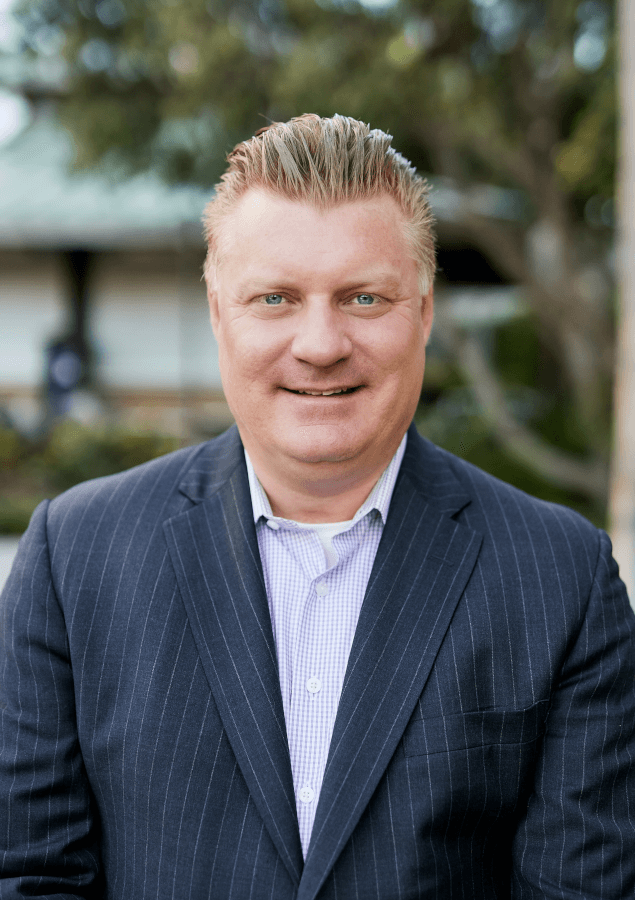
Dr. Tim Calahan brings more than 30 years of professional experience, including over 25 years in healthcare and 15 years in management consulting. With a strong engineering foundation and advanced business training, he is known for translating complex technology decisions into clear, executable strategies, rescuing technology projects, and setting strategic roadmaps for digital transformation. His extensive expertise lies in cloud transformation, including hosting Epic on the cloud.
Most recently, Tim served as Chief Technology Officer at Michigan Medicine, where he led enterprise technology strategy and major cloud modernization initiatives, including its Epic and Sectra migrations to public cloud. Prior to Michigan Medicine, he was CTO of Virtustream Healthcare Cloud, where he led the creation of the first private cloud platform purpose-built for Epic and was recognized as a finalist for CRN Innovative Product of the Year in 2017 and 2018.

Recent Posts
-
 Blog Post
The CapEx Trap: Why OpEx Is the More Disciplined Model for Hospital IT
At a recent healthcare industry dinner, a CIO put the challenge plainly: “I can get…
-
 Blog Post
Why Your Infrastructure is Holding Back Your AI Strategy: An AI Roadmap for Healthcare
A recent CHIME survey shows that a majority of health systems are either currently migrating…
-
 eBook
eBookA Healthcare Executive’s Guide to EHR Modernization
How healthcare leaders are reclaiming IT budgets, strengthening resilience, and building the runway for what…
