
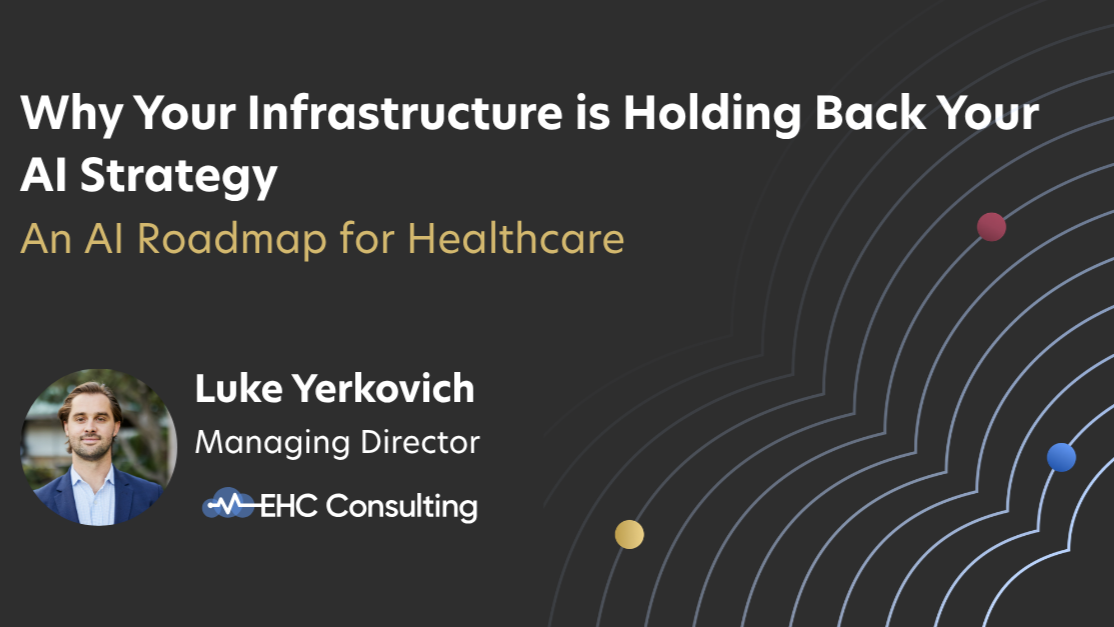
A recent CHIME survey shows that a majority of health systems are either currently migrating their EHR to cloud, already managing their EHR on cloud or accelerating their use of cloud technologies signaling that the industry is well beyond the early adopter phase of EHR to cloud migration.
At EHC, the organizations we work with are moving to cloud for various reasons – exiting the data center business, move infrastructure and application management to a partner to reclaim their staff’s resources, shifting to an OPEX model for more predictable outcomes, improve security & resilience, and position themselves to take advantage of next-generation cloud and EHR vendor technologies. The use of artificial intelligence to enhance both clinical & business outcomes is showing up in real, measurable ways across the industry. In recent trade shows, Epic® has demonstrated their investment in AI by giving health systems the ability to embed AI directly in their workflows, leverage chatbots, and deploying their next generation analytics solution, Cogito Cloud, which is based on Microsoft Fabric.
At Epic’s UGM conference this year, the main theme was AI – using it to maximize your existing investments, using it to improve existing clinical workflows, and using it to rationalize applications and vendors among many other use cases.
While AI has delivered valuable business and clinical outcomes like increasing revenue through automatic schedule backfilling, reducing clinician burnout through automated workflows, reducing claims denials, and improving patient care through predictive patient risk scoring, it has also exposed problems with how health systems have managed and organized their data up to this point.
The problem: fragmented, poorly structured data on legacy, on-prem technologies severely limits the ability to adopt AI and generate trusted outputs.
EHC’s Data Services organization provides a roadmap, infrastructure foundation, data pipeline deployment, use case implementation, agent development, and governance to help health systems go from AI readiness to measurable outcomes.
Here is how we guide clients through their data roadmap.
1. Infrastructure Modernization
Data sources must reside next to the data warehouses and AI tools that you will use. To do that, your data sources must be in the public cloud where these tools live. This requires migrating off legacy, on-prem technologies and reducing on-prem dependencies where possible.
CAPEX-heavy data center models often lack governance and transparency, which leads to IT teams spinning up additional databases, provisioning more storage, and eating up compute on servers supporting critical workloads. Over time, this creates a messy web of hundreds of databases with undocumented dependencies and downstream impact to mission-critical SLAs, like missed ETL times.
The first step of AI readiness is untangling this web through database rationalization, re-platforming, and data migration to newly built cloud systems.
2. Data Organization
Now that your systems and data are migrated to cloud, you can manage and organize your data in ways that aren’t possible on-prem. Rather than manage hundreds of databases residing on a single box without granular monitoring, you now have the ability to manage and monitor databases down to the resource level using cloud-native monitoring and governance tools. Simply put – this level of control and visibility is not possible in an on-prem model.
This new level of control and visibility allows you to organize your data to ensure that it remains compliant, secure, and only the data that you want is streaming to data warehouses where AI can do its job.
The governance associated with this, like compliance tooling, FinOps, tagging, data lineage, data masking, and monitoring that was set up during the initial cloud foundation deployment is critical for data organization.
3. Data Mobility
Once you have modernized your infrastructure on public cloud systems, rationalized duplicative environments, untangled your web of dependencies, and organized your data, the deployment of data pipelines to ensure your data can move between source and target in a compliant, secure, and performant fashion that meets organizational SLAs.
This is what enables your data to move from source systems (i.e. EHR, clinical apps, HR app, finance apps, etc.) to the target systems (i.e. data warehouses, data lakes, etc.) where AI can be layered on to provide measurable outcomes.
4. AI Adoption
This is the fun part – using AI tools and models to solve your objectives.
It is important to first document business or clinical issues that you are solving for, like some of the examples mentioned at the beginning of this blog.
Once you have organizational alignment on what you are solving for, you can decide if you want to create and train your own models or leverage out of the box, proven models from organizations like CloudForce and their NebulaONE product. Public cloud vendors also provide native agents and tools that can easily plug and play into your environment.
5. Outcomes
The outcomes are measurable and powerful. If infrastructure is modernized effectively, you can organize your data to adopt AI in a trusted fashion, and if the organization is aligned on the problems you are solving for, you can choose the proper AI tooling to solve your problems. Then you can watch your revenue increase, attrition rates decrease, and patients become safer and healthier.
Like any major digital transformation, it all starts with a well-documented plan and alignment in the problems for which you are solving.
Health systems across the nation are striving to adopt next-generation cloud technologies, but significant foundational and readiness work is required for successful adoption. The foundational work can take years, which is why most organizations are starting now.
About the author

Luke Yerkovich guides healthcare organizations through public cloud strategies, ensuring preparedness for cloud migrations. With over a decade of healthcare IT experience, Luke was part of the original Virtustream team that built the first healthcare private cloud for Epic earning him multiple awards at Dell Technologies.
Luke’s expertise bridges business objectives with technical strategy, giving health system executives and technical teams the clarity and confidence to move forward with their digital transformation journeys.

Recent Posts
-
Blog Post
Why Your Infrastructure is Holding Back Your AI Strategy: An AI Roadmap for Healthcare
A recent CHIME survey shows that a majority of health systems are either currently migrating…
-
 eBook
eBookA Healthcare Executive’s Guide to EHR Modernization
How healthcare leaders are reclaiming IT budgets, strengthening resilience, and building the runway for what…
-
 Webinar
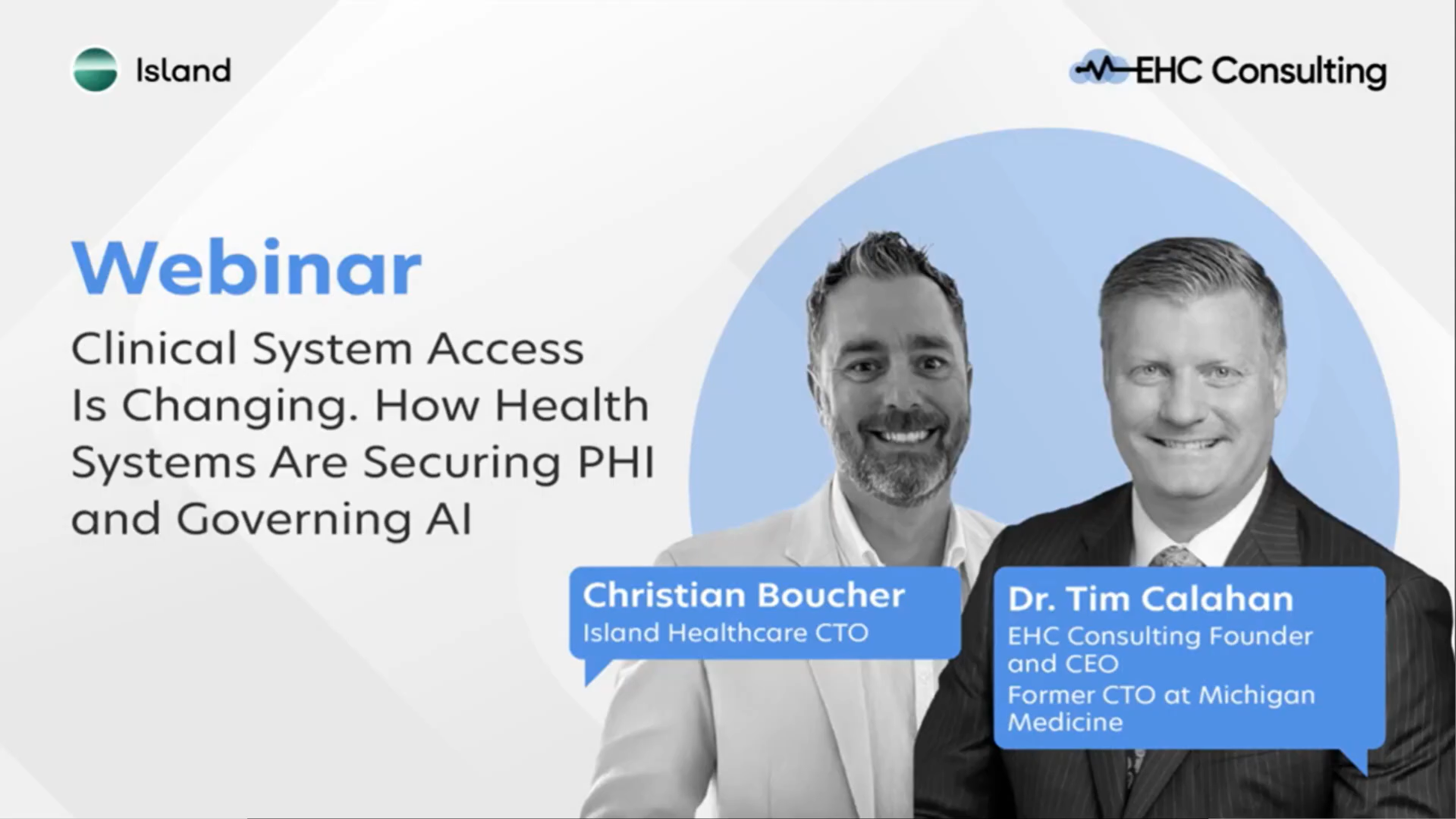
Securing PHI and Governing AI as Clinical Systems Move to the Cloud
Escape legacy hardware delays and deliver frictionless, cloud-native EHR access to your clinicians.
